
The Small Things, Chosen Carefully
Marie has loved tea for years, and lately she has been noticing how much Tokimeki arrives for her during her daily tea ritual before the first sip. She thinks about which farm the leaves came from and whose they are, about the artist who made the beautiful tea vessel she is about to drink from, about which combination of tea leaves suits this particular hour of the day. By the time the water is poured, a dozen small considerations have gone past, and each one carries its own small lift for her.
"Every day, it's just drinking tea," she says, "and yet I find myself thinking, how is it possible to experience this much Tokimeki in a single moment?"
The detail we keep coming back to is what happens at the end of her tea ritual. Marie says the scent that lingers after she finishes is enjoyable, and that washing up afterward is enjoyable too, which is not how most people describe doing the dishes. Her reason is simple: she loves the leaves she chose and she loves the tea ware, so handling them and cleaning them afterward is part of what sparks joy for her. There is no part of it she is putting up with in order to get to the rest.
Most of us save careful choosing for the decisions that feel large and important. Choosing an apartment gets weeks of deliberation, while purchasing a mug gets a knee-jerk reaction based on whatever was available on the shelf. However small, a mug is something that ends up in your hand every morning during your coffee or tea ritual. Marie's practice runs the other way around and places great importance on choosing those small decisions with care.
"That's why I truly believe that even small things," she says, "especially the small things, deserve to be chosen carefully, with Tokimeki."
This is also how our sensitivity gets built over time. Noticing the spark of joy in small things is what leads to awareness of the bigger picture, which is the fifth of our 10 Disciplines of Tokimeki, and it works because the small choices come around so often and give you repeatable opportunities to practice. You make a small choice every day and a large career decision once or twice in a life. The compass gets calibrated on the small choices.
One key word is connection
Then Marie puts the question to her husband and asks what’s been sparking joy for him. Takumi Kawahara is the CEO of KonMari Media Inc. and her partner in business as well as in life, and the vast majority of his Tokimeki tends to be about people, as she points out with some affection.
What has been sparking joy for him lately is the people who work in food production and the primary food industry. He is clear that the work is hard at the moment, with the cost of feed and fertilizer climbing, and says this is exactly why he admires the care those people bring to their work.
"The dedication these people bring is so precious," he says, "and when they share with me why they do what they do, I find it truly beautiful."
What he wants from Art of Tokimeki is for more people to meet those individuals, and for a culture to grow around understanding the passion behind what gets made, so that we eat and share those things with the understanding intact. The food tastes the same either way. Knowing who is behind it and what story lives there, he says, amplifies the joy and the Tokimeki for everyone.
For anyone who wants to live more richly, with more Tokimeki, he offers one key word, and the word is connection.
Marie takes that and gives her own version. She has been making a point lately of meeting the artists whose work she uses, going to the solo exhibitions of the potters and finding the farmers who grow her tea. Once she has the memory of that meeting, she says, the Tokimeki multiplies and sustains itself. The cup stops being only a cup.
You might already know the feeling without having gone anywhere. Think of the difference between a jacket ordered online and one that was taken in for you by someone whose shop you walk past every week, or between a recipe off the internet and the one an aunt talked you through on the phone. The object is the same in both cases. What changed is that you know something about how it reached you and attach some sentimental value to it.
None of which means you have to research the origins of everything you own. Coffee from a place you know nothing about is still good coffee. You might, though, start paying closer attention to the handful of things you use, eat, drink, or touch every day, and see what there is to appreciate in them.
Tokimeki: the infinite energy source
Marie goes on to talk about what happens next. She believes that when you start choosing the things that contribute to your own Tokimeki, the positive energy you carry gets shared with the people around you, and that this is how a happier world gets built, one person at a time. Tokimeki that sparks in you reaches the people beside you, and beyond them.
"It's actually quite a profound thing to be part of," she says.
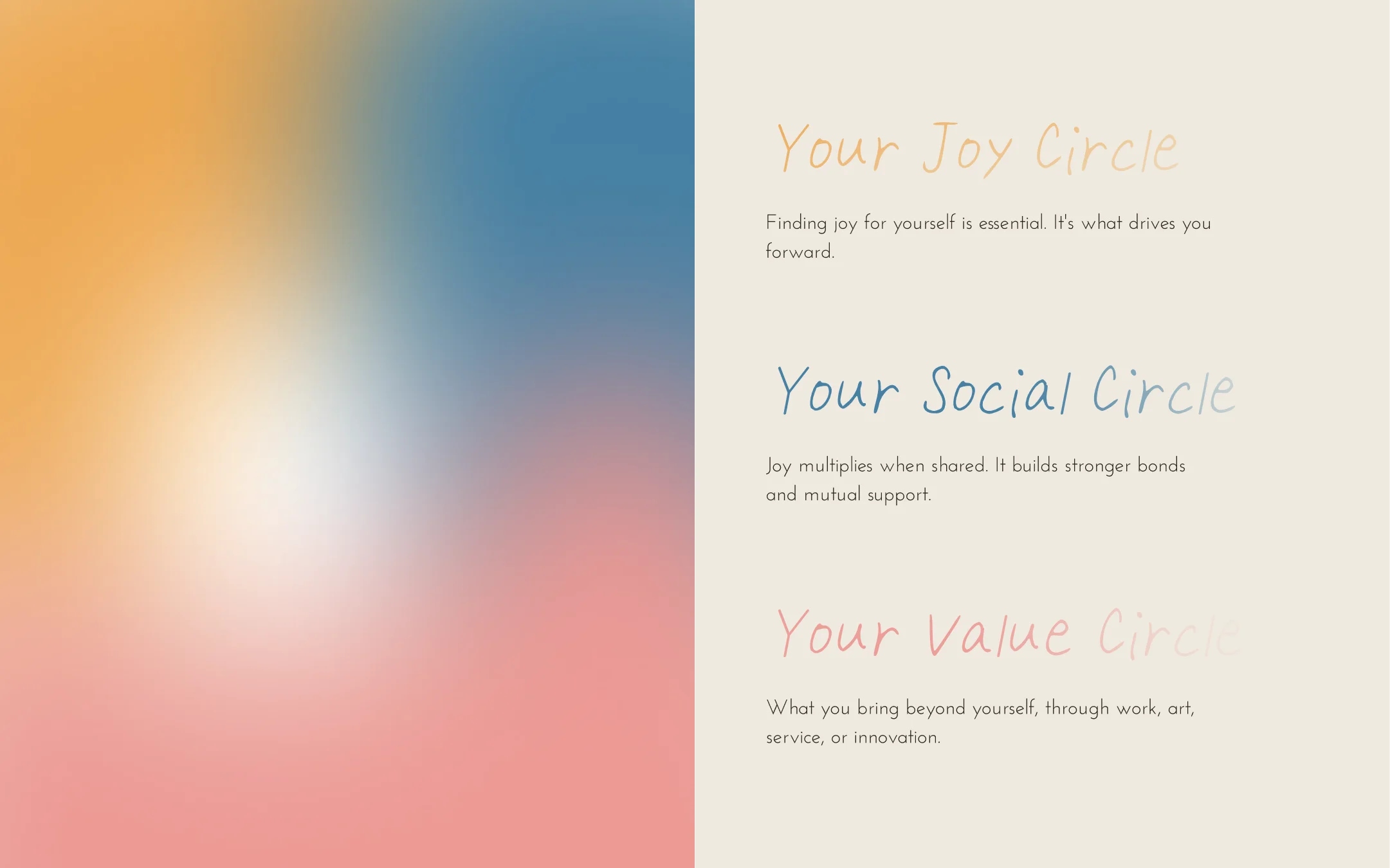
That sounds like a large claim for a cup of tea until you follow the line back. The farmer who grew those leaves has a customer who cares what the leaves are. The potter has someone at their exhibition telling them what the vessel gets used with appreciation on a Sunday morning. Marie's enjoyment of her own tea is not sealed off from either of them, and neither is yours from whoever made the things you love. This is the tenth of the Disciplines of Tokimeki, sparking joy for yourself, your circle, the world.
Those three circles feed each other. Looking after your own Tokimeki is maintenance rather than self-indulgence, since you can't hand anyone a joy you don't have, and the version of you that has been paying attention to what makes you feel alive is a better person to be around. Knowing what sparks joy for the people closest to you is also what makes those relationships sturdier, and the Tokimeki you find in your own life has a way of setting off theirs.
The third circle is where it becomes something the world can use and benefit from. When what gives you Tokimeki also gives it to other people, it can turn into work, or something you make, or something you offer, and it can support you while it does. Every person who starts choosing by Tokimeki adds to the collective total in circulation, which is why we think of it as something close to an infinite energy source, and why Marie describes a happier world arriving one person at a time.
A practice for this week
Pick one thing you eat, drink, or use nearly every day: coffee, eggs, a pen, the bowl you always reach for. Spend ten minutes this week finding out where it comes from and who is behind it. Then use it exactly as you normally would, and see whether anything feels different.
Three extra journal prompts, if you want to take this further:
- When you finish something you enjoy, what do you do in the next moment? Notice whether you rush straight to the next task or stay with the spark of Tokimeki a little longer, and how it feels to let it last.
- Whose work do you rely on every week without ever having told them? Imagine saying it to them out loud, and pay attention to what happens in your chest as you picture it.
- Name one thing you know for certain that sparks joy for someone you love. Notice whether it came to you straight away, or how long you had to think about it.
Come and join us
Every week Marie asks a Tokimeki question and answers it first, then opens it up to anyone who wants to answer alongside her. This month the questions have been about Tokimeki in nature. The replies are the part we look forward to the most, and the more you share the more Tokimeki you spark in others in our community.
You can join in on Instagram or X, and read more at artoftokimeki.com.